
Book Appointment Now

Signs of Erectile Tissue Damage From Penile Plaque
Men experiencing a sudden or progressive loss of erectile function often assume it is a natural part of aging or a temporary cardiovascular issue. Physical changes in anatomy, however—such as a noticeable curvature or hard lumps beneath the skin—indicate the root cause is often structural.
Recognizing the early signs of erectile tissue damage is critical. A physical barrier within the tissue fundamentally alters the hemodynamics of an erection, creating mechanical failures that standard oral medications cannot fix.
Mechanics of Fibrotic Plaque
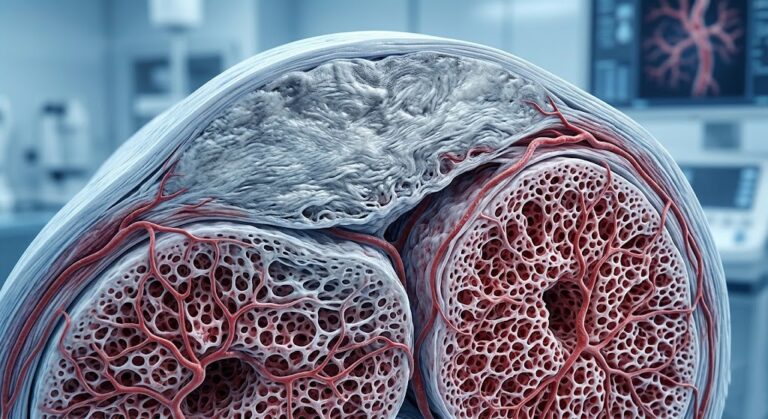
Understanding structural tissue failure requires looking at the internal anatomy of the penis, specifically the tunica albuginea. This tough, elastic membrane surrounds the sponge-like erectile cylinders (corpora cavernosa) and plays a vital role in rigidity.
Tissue Inelasticity and Mechanical Restriction
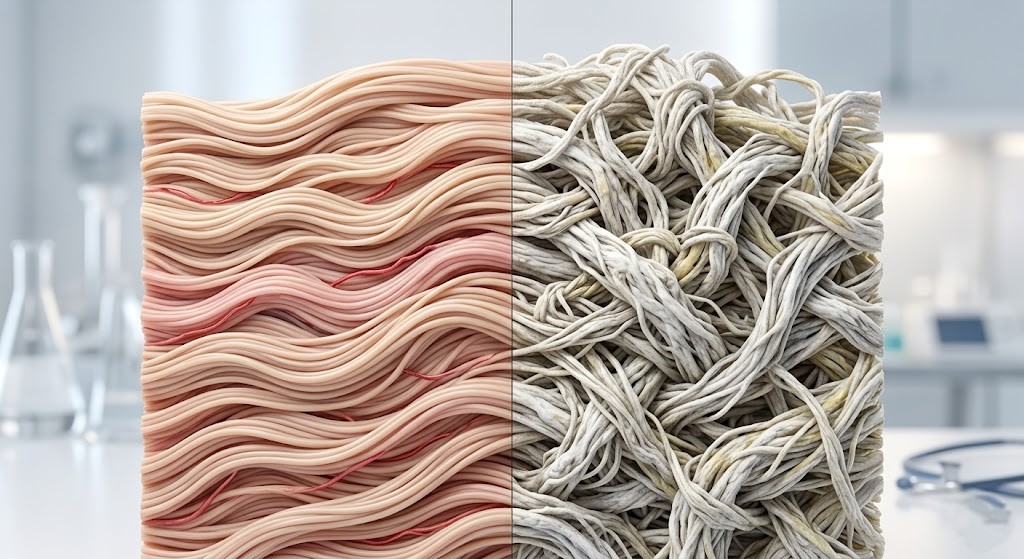
Erectile tissue damage often begins with microvascular trauma during intercourse. A healthy tunica albuginea repairs these micro-tears seamlessly. In some men, however, the healing process malfunctions. The body deposits dense, disorganized, and inelastic Type III collagen instead of flexible Type I collagen.
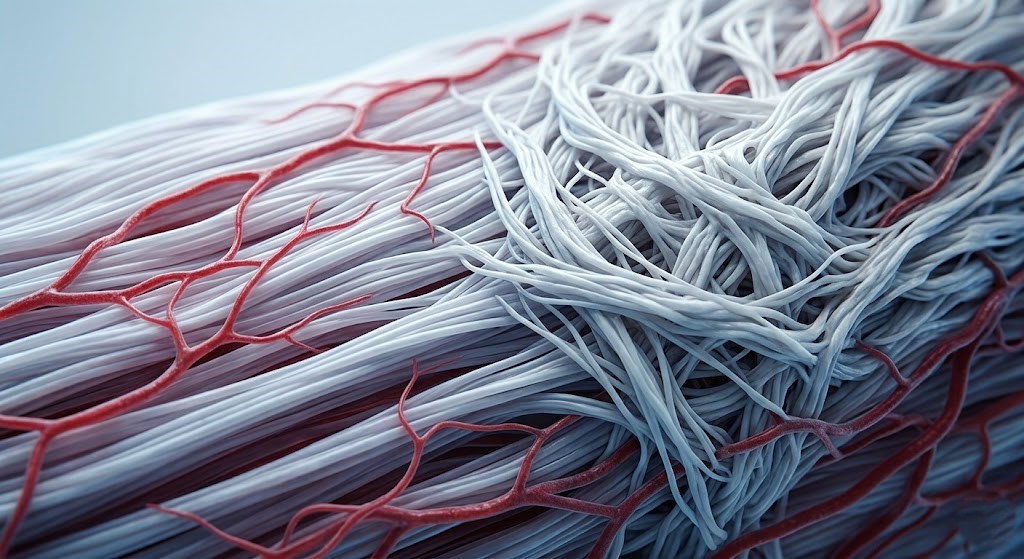
This accumulation creates a hard fibrotic scar, clinically referred to as penile plaque. Because this plaque cannot stretch, it acts as a mechanical restraint. Blood flowing into the corpora cavernosa during arousal causes the healthy elastic tissue to expand, but the scarred section does not, forcing the penis to bend or indent around the rigid plaque.
Veno-Occlusive Dysfunction
The relationship between plaque and erection difficulty comes down to blood retention. A rigid erection relies on a precise hydraulic mechanism called veno-occlusion. As the corpora cavernosa expand with arterial blood, they press firmly against the surrounding tunica albuginea. This outward pressure acts like a valve, pinching off the emissary veins and trapping the blood inside.
Inelastic plaque prevents the corpora cavernosa from fully expanding, meaning that critical outward pressure is never achieved. The veins remain partially open, allowing blood to leak out as fast as it enters. This condition, known as veno-occlusive dysfunction, is the primary reason men with structural tissue damage find it impossible to maintain rigidity.
Identifying Signs of Erectile Tissue Damage Early
The progression of fibrotic scarring typically occurs in two distinct clinical phases, each presenting different challenges for the patient.
Acute Inflammatory vs. Chronic Phases
The acute phase features active inflammation. During this time, men may experience painful erections as the scar tissue actively forms and remodels. This phase can last anywhere from six to eighteen months.
Once the inflammation subsides, the condition enters the chronic stable phase. The pain usually resolves, but the structural deformity and the resulting issues with erection become fixed. The plaque may even begin to calcify, becoming bone-hard.
Physical Changes: Curvature and Girth Loss
Aside from functional failure, the physical hallmarks of erectile tissue damage include:
-
A pronounced upward, downward, or lateral curvature during an erection.
-
An “hourglass” deformity, where the shaft narrows significantly at the site of the plaque.
-
A palpable, hard lump under the skin, usually on the dorsal (top) side of the penis.
-
Noticeable penile implants with shortening or loss of girth.
Clinical Diagnostics in Woodford
At Vital Wave in Woodford, our clinical team approaches these complex presentations with a highly focused, evidence-based methodology. Patients from Woodford, Chigwell, and the surrounding areas presenting with structural erectile issues require a proper diagnosis that goes beyond a basic visual assessment.
Our clinical leadership, including specialist urologist Dr Kishore Bhal and senior osteopath Robert Shanks, utilizes a thorough physical examination to palpate and map the exact location, density, and size of the scar tissue. By identifying the exact degree of mechanical restriction, we can determine how severely the plaque is compromising blood flow and trapping mechanisms.
Advanced Interventions for Restoring Tissue Function
Standard PDE5 inhibitors (like sildenafil or tadalafil) often provide diminishing returns for patients whose erectile dysfunction is driven by physical scarring. These medications rely on healthy, expansive tissue to work. They cannot dissolve scar tissue or correct a mechanical veno-occlusive leak.
Moving Beyond Standard Medications
Treating the root cause requires interventions that target the fibrotic tissue directly and encourage cellular repair. At our Woodford clinic, we utilize the world-leading EMS Swiss DolorClast system.
This focused shockwave therapy technology delivers precise acoustic energy directly into the damaged tissue. The acoustic waves trigger microtrauma at a cellular level, stimulating angiogenesis (the formation of new blood vessels) and promoting the remodeling of dense collagen plaques.
Breaking down the mechanical restriction and restoring microvascular health allows patients to improve their tissue elasticity and regain natural erectile function. Men dealing with these structural changes will find that exploring advanced penile plaque treatment offers a non-invasive, medically sound pathway to recovery without relying on daily medication.