
Book Appointment Now

IDD Therapy for Spinal Decompression in Woodford
Patients suffering from unresolved sciatic pain, herniated discs, or chronic lower back immobility often reach a frustrating plateau. When standard manual therapy and rest fail to provide lasting relief, and the prospect of invasive spinal surgery is a primary concern, clinical intervention requires a more targeted mechanical approach.
At our Woodford clinic, our osteopathic team routinely evaluates patients whose spinal conditions have outlasted standard care. By utilizing Intervertebral Differential Dynamics (IDD) therapy, we apply precise, computer-controlled decompression to the exact spinal segment causing the dysfunction.
This non-surgical intervention addresses the structural root of disc compression, allowing the body’s natural tissue repair mechanisms to function.
Biomechanics of Intervertebral Differential Dynamics
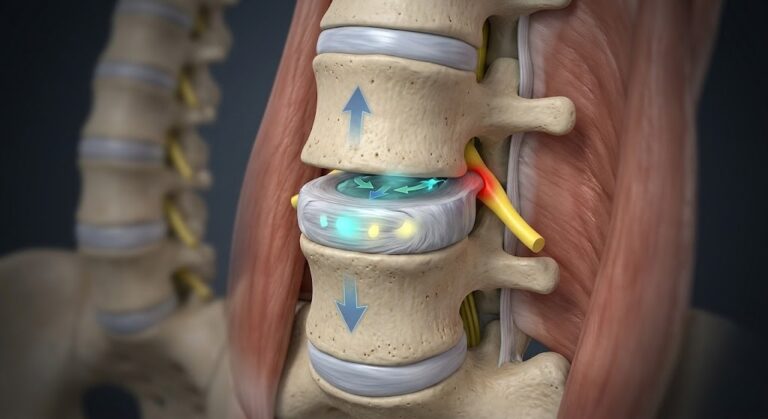
The spine naturally bears the compressive load of daily movement. When an intervertebral disc is injured or begins to degenerate, it loses hydration and height, often bulging or herniating to press against surrounding spinal nerves. Effective idd treatment works by counteracting this constant compression using highly specific distraction forces.
How Negative Pressure Retracts Herniated Discs
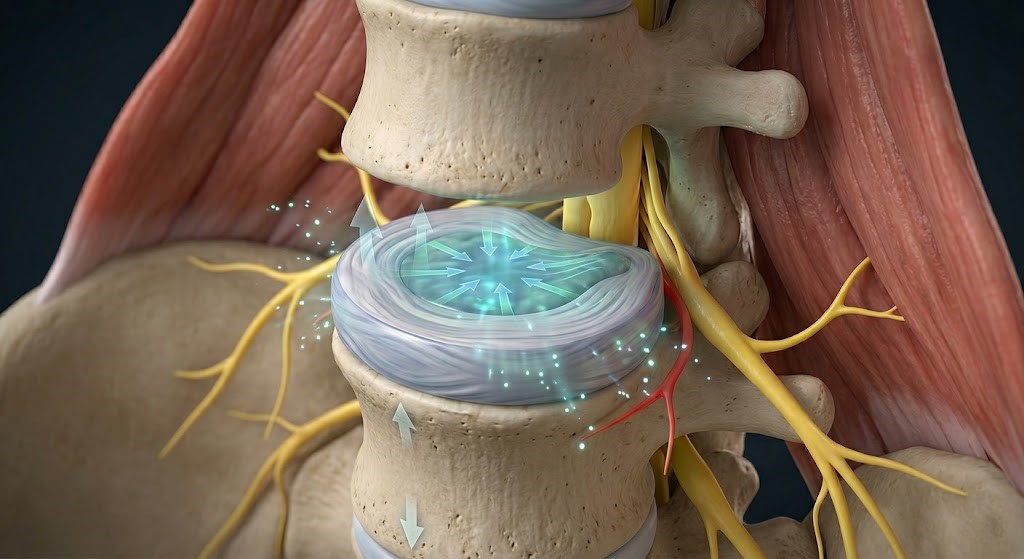
During an IDD session, the machine creates a precise separation between two specific vertebrae. This targeted separation generates negative intradiscal pressure—a vacuum effect within the disc itself. T
his negative pressure serves two vital mechanical functions: it encourages the retracted disc material to pull away from the compressed nerve root, and it draws essential oxygen, water, and nutrient-rich fluids back into the damaged disc space to facilitate cellular healing.
Standard Manual Traction vs Computer-Controlled IDD
Understanding the clinical difference between traditional traction and advanced decompression is necessary for setting recovery expectations.
| Feature | Standard Manual Traction | IDD Therapy |
| Pull Force | General and linear | Segment-specific and logarithmic |
| Angle Targeting | Broad spinal application | Precise mathematical angles |
| Muscle Reaction | Often triggers muscle guarding | Bypasses proprioceptive defenses |
| Technology | Manual or simple mechanical | Advanced computer monitoring |
Resolving Chronic Sciatica & Severe Back Spasms
Nerve compression rarely exists in isolation. When a disc presses against the sciatic nerve, the surrounding paraspinal muscles often lock down in a protective state.
Limits of Conventional Back Spasm Treatment
Standard back spasm treatment typically relies on muscle relaxants, heat therapy, or general massage. While these methods provide temporary symptom relief, they do not resolve the underlying structural trigger.
If the disc remains compressed, the nervous system will continuously signal the muscles to spasm to protect the unstable area. IDD therapy addresses the root cause, decompressing the nerve so the secondary muscle spasms can finally release.
Targeted Pull Angles & Proprioceptor Stimulation
The human body is designed to resist sudden pulling forces. Standard traction often fails because proprioceptors (sensory receptors in the muscles) detect the pull and immediately trigger a defensive contraction.
The Accu SPINA system used in IDD avoids this by applying a logarithmic pull curve. The tension increases so gradually that it bypasses the body’s natural guarding reflex, allowing for a deep, therapeutic stretch of the affected joint capsule.
Patient Experience on the Accu SPINA System
Entering a clinical rehabilitation program requires clear expectations regarding the physical process and the financial commitment.
Harnessing, Oscillation, and the Treatment Sensation
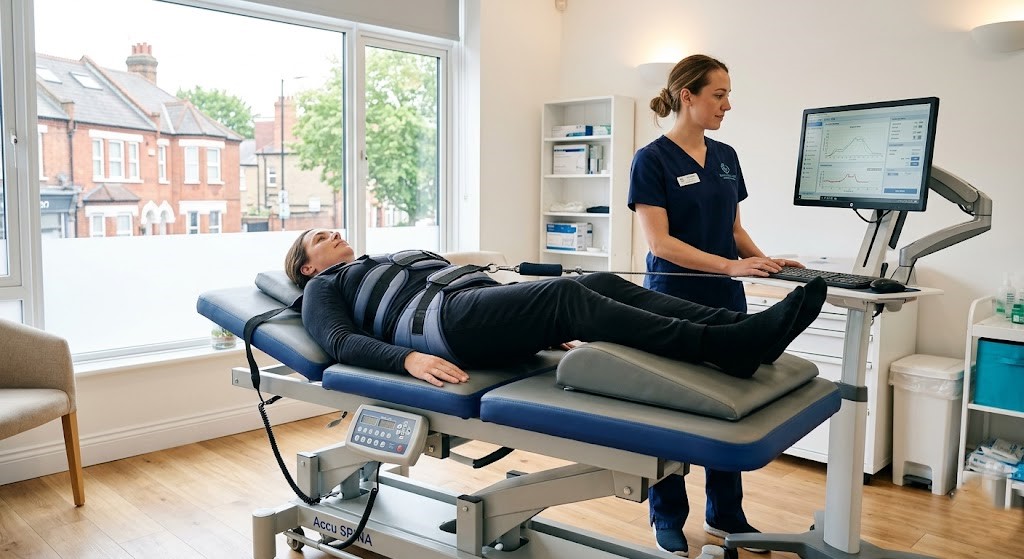
Patients remain fully clothed during the procedure. You are fitted with highly specific pelvic and chest harnesses before resting comfortably on the treatment bed. As the machine applies the distraction force, it also introduces sinusoidal oscillation—a smooth, wave-like motion at the point of maximum stretch.
This gentle oscillation works to release tight soft tissues and mobilize the facet joints. Most patients find the 25-minute session deeply relaxing, experiencing a gentle pulling sensation with zero required downtime afterward.
Evaluating IDD Treatment Cost and Clinical Protocols
Because spinal discs have a poor natural blood supply, healing requires sustained, repeated decompression. A standard clinical protocol generally involves around 20 sessions over a six-to-eight-week period.
While assessing idd treatment cost, patients must weigh the investment of this structured program against the financial and physical toll of long-term pain medication use, lost working hours, or the extensive recovery periods associated with invasive procedures.
We provide clear, straightforward pricing with no hidden costs, and most major health insurers are accepted at our clinic.
| Treatment Type | Duration | Fee |
| IDD Therapy (New Patient) | 60 min | £105 |
| IDD Therapy Session | Standard | £105 |
| New Patient: Consult, Exam & Treatment | 60 min | £87 |
| New Patient: Consult & Exam Only | 30 min | £65 |
| Follow-up Treatment | 30 min | £65 |
| Follow-up Treatment | 45 min | £82 |
| Follow-up & Medical Acupuncture | 45 min | £82 |
| Sports or Deep Tissue Massage | 60 min | £62 |
| Sports or Deep Tissue Massage | 90 min | £93 |
Clinical Candidacy for Therapy Near Woodford
Not every patient is an immediate candidate for decompression. Conditions such as severe osteoporosis, recent spinal fractures, or certain inflammatory joint diseases may serve as contraindications.
At Vital Wave, located at Jubilee Market on St Barnabas Road, our registered musculoskeletal clinicians bring decades of diagnostic experience to your spinal health. We conduct a thorough clinical and biomechanical assessment before recommending any decompression protocol.
For patients actively seeking an evidence-based alternative to spinal decompression therapy, booking a consultation for idd therapy near woodford is the correct next step. We will review your medical history, assess your spinal mobility, and determine if computer-controlled decompression is the right path to restore your movement and quality of life.